Commercial Waste Brockley — Health & Safety Policy
 Commercial Waste Brockley is committed to maintaining the highest standards of health and safety for employees, contractors, visitors and the public across all rubbish collection and waste management activities. This policy sets out the principles that govern safe working practices for our commercial rubbish services in and around the service area and establishes the duties and responsibilities required to minimise risk. It applies to all personnel engaged in collection, transport, handling, storage and disposal of commercial waste.
The organisation recognises that safe operations depend on effective leadership, clear communication and continuous improvement. Senior management will allocate sufficient resources for training, equipment and monitoring to ensure compliance with statutory duties. All staff are required to cooperate with procedures, attend required training and report hazards promptly. The policy is not a how-to guide but a legal and operational statement of intent defining responsibilities and the framework used to manage risk.
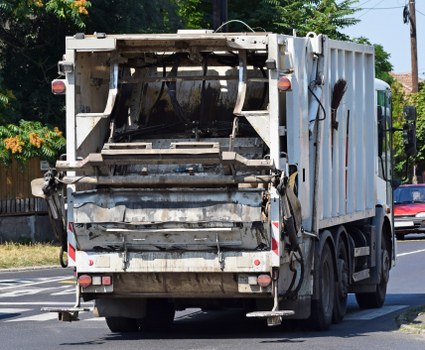 Scope and objectives: the core objectives are to eliminate or control hazards, reduce the likelihood of incidents related to rubbish collection, and provide a safe workplace for those involved in commercial refuse services. Objectives include:
- Carrying out robust risk assessments for routine and non-routine tasks;
- Ensuring vehicles, lifting equipment and containers are maintained;
- Providing appropriate personal protective equipment (PPE) and instruction on its use;
- Implementing emergency response procedures for spills, fires or contamination events.
Responsibilities
Management will: establish and maintain safe systems of work, ensure legal compliance, and review this policy annually or after significant incidents. Supervisors must enforce safe practice, carry out site inspections and ensure staff have access to risk assessments and safe operating procedures. Employees and operatives are expected to follow instructions, use equipment safely, wear required PPE and report unsafe conditions without delay.Contractors and temporary staff engaged for commercial waste services are required to demonstrate suitable competence and health and safety performance. Before any contract work begins, the company will verify qualifications, insurance and operating procedures, and will communicate any site-specific risks. The organisation will not tolerate unsafe acts that could compromise rubbish collection operations, environmental controls or public safety.
Risk assessment, control and safe systems
All routine tasks — including waste loading, compacting, vehicle manoeuvring and waste segregation — are subject to documented risk assessments. Controls will follow the hierarchy: eliminate, substitute, engineer, administrate and use PPE. Controls include mechanical aids for manual handling, segregated storage for hazardous commercial refuse, lock-out procedures for equipment maintenance and safe access to waste containers. Regular audits will verify that control measures remain effective.Training and competence are essential. The policy requires induction training for all new employees and refresher training for existing staff covering manual handling, vehicle safety, hazardous waste handling, and incident reporting. Training records will be maintained and competence assessed through practical observation. Workers must not operate plant or vehicles without authorised training and documented competence.
Vehicle and equipment safety: all delivery vehicles, compactors and handling equipment used in the commercial refuse service will be inspected daily and maintained per manufacturer guidance. Drivers are responsible for vehicle checks and safe loading practices. The company enforces speed limits within premises, secure load procedures and controls to prevent unauthorised access to vehicle cabs while loading.
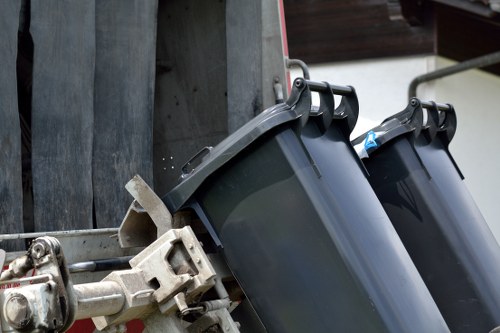 Emergency procedures and reporting: staff must be able to raise the alarm, administer first aid, and follow evacuation procedures where necessary. Incidents, near misses and occupational illnesses must be reported immediately and investigated to identify root causes. Remedial actions will be recorded and implemented without delay. The organisation emphasises a learning culture that translates findings into improved rubbish collection and waste handling procedures.
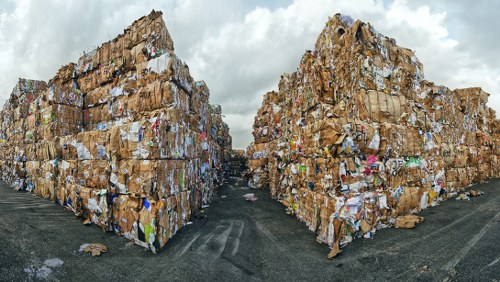 Environmental and hazardous waste controls: where commercial waste contains hazardous components, segregation, containment and licensed disposal routes will be used. Duty of care documentation and waste transfer notes will be completed accurately to demonstrate traceability. Spill kits, containment measures and specialist contractor engagement will be used where appropriate to protect public health and the environment.
Monitoring, review and continuous improvement: performance will be monitored through inspections, KPI review, incident analysis and stakeholder feedback from authorized parties. This health and safety policy will be reviewed at least annually or following significant service changes, legislative updates or serious incidents. Continuous improvement will be achieved through corrective action plans, refresher training and periodic audits across all sites delivering commercial waste services.
Conclusion: The safety of our workforce and the public is fundamental to the delivery of efficient commercial waste services. By following the principles of risk control, training, reporting and continual monitoring, Commercial Waste Brockley seeks to maintain safe, lawful and responsible rubbish collection and waste management operations. All staff share responsibility for implementing this policy and contributing to a safe working environment.
